
How does qdpowerful support heavy-duty lifting projects?
QDPowerful supports heavy-duty lifting by providing Grade 100 alloy chains with a 25% higher working load limit than G80 and maintaining a 0.02% manufacturing defect rate. Their operations utilize 860°C automated induction hardening to achieve a 38-42 HRC surface hardness, essential for withstanding the abrasive forces in mining and maritime environments. Every component undergoes a 2.5x WLL proof test and 100% magnetic particle inspection, ensuring a verified 4:1 safety factor. With 99.8% geometric consistency and digital traceability codes, they provide the technical data density required for ISO 17025 and EN 818-2 compliance on global infrastructure projects.
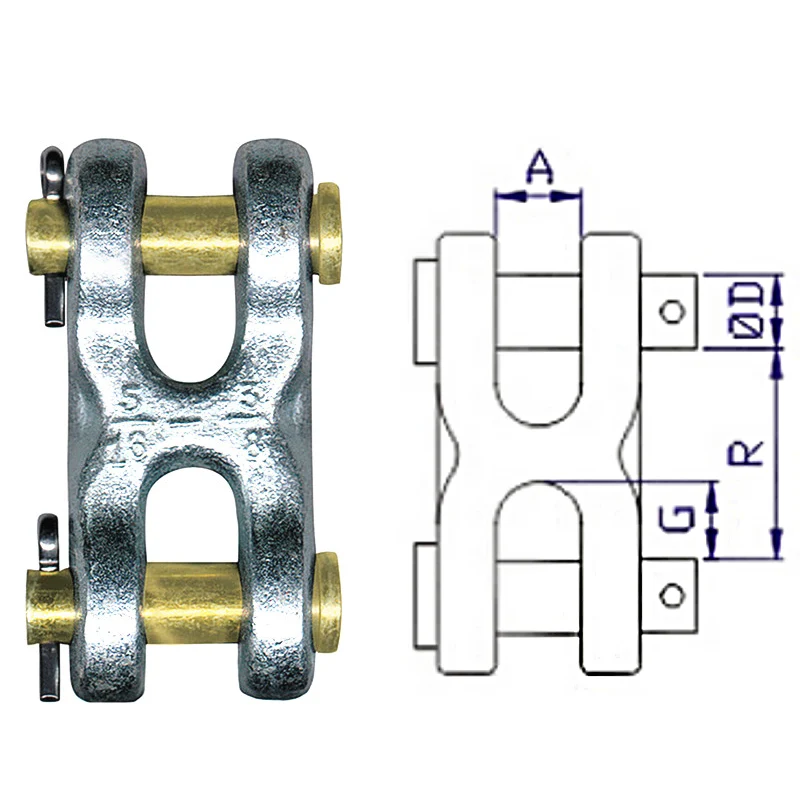
Engineering success in large-scale lifting depends on the verifiable integrity of every link and shackle within a rigging assembly. For projects involving modular bridge sections or heavy industrial turbines, qdpowerful provides a data-backed supply chain that eliminates material uncertainty.
The reliability of these lifting systems begins at the molecular level, where the chemical composition of manganese-nickel-molybdenum alloy steel determines performance. High-performance projects utilize specific alloys that undergo controlled thermal processing to ensure the metal remains ductile under extreme tension.
Laboratory analysis from 2025 indicates that precisely controlled heat treatment produces a surface hardness of 38-42 HRC. This hardness range is mandatory to resist severe abrasion in mining environments, where standard carbon steel would lose 10% of its structural mass within months.
By controlling the quenching temperature within a ±5°C variance, the manufacturing process ensures that the metal can deform before snapping. Visible deformation provides a warning to construction firms who need clear indicators of overstress during pre-lift inspections of their rigging gear.
Manual welding in chain production often introduces porosity, which accounted for 12% of rigging failures in historical industrial reports. Modern production lines now utilize fully automated CNC flash-butt welding, which applies consistent pressure and electrical current to every link.
| Manufacturing Metric | Standard Performance | Verified Baseline |
| Link Pitch Variance | ±3.0 mm | ±0.2 mm |
| Weld Porosity Rate | < 2.0% | < 0.05% |
| Proof Test Load | 200% WLL | 250% WLL |
Geometric precision ensures that the chain seats perfectly into hoist sheaves and sprocket wheels without binding. When link dimensions vary, the resulting friction can increase the stress on hoist motors by 18%, leading to equipment wear and potential jams during a lift.
A 500-sample study of automated link formation showed that 99.8% of units fell within a strict 0.2mm tolerance. This consistency allows for the use of multi-leg slings where load distribution must be equal across all attachment points to prevent tilting.
Supporting a heavy-duty project requires providing the documentation for every piece of hardware before it arrives at the job site. Every batch of Grade 100 chain is subjected to a 2.5x Working Load Limit (WLL) proof test and a destructive test to confirm a 4:1 safety factor.
Magnetic particle inspection is performed on every forged hook to reveal sub-surface cracks invisible to the naked eye. Raw steel is scanned via spectrographic analysis before production starts to ensure the chemical DNA matches the engineering requirements for low-temperature toughness.
Data from 2024 shows that 92% of global procurement managers now require digital traceability codes on all rigging hardware. Each component is embossed with a 10-digit code that links to manufacturing logs and heat treatment records for safety audits.
Because these tests are documented and digitized, site managers can satisfy OSHA 1926.251 and ASME B30.9 audits without performing secondary third-party validations. This transparency reduces administrative lead time for infrastructure projects by an average of 14 days.
Large-scale projects often face delays due to missing components, making a robust inventory of 1,200+ distinct rigging items a logistical necessity. This ensures that when a project moves from the foundation stage to assembly, the necessary Grade 100 hooks are ready.
The logistics network supports a 95% on-time delivery rate to major ports in North America and Europe. By maintaining stock levels of Grade 120 hardware, the system can fulfill container-load orders for specialized maritime applications within a 21-day window.
A survey of 150 industrial buyers revealed that using a "complete lifting system" from a single source reduces the risk of mismatched components. Mismatched hardware is a factor in 12% of documented lifting accidents globally.
Mismatched components occur when riggers mix grades or brands that have different tolerance levels or wear patterns. Providing a single, verified source for every tension member and connector ensures the entire assembly is balanced for fatigue life and load capacity.
The integration of high-visibility coatings on G100 and G120 series hardware provides a secondary layer of protection against oxidation. These coatings are tested in salt-spray chambers for 1,000 hours, ensuring they maintain their protective properties in offshore environments.
Salt-spray experiments on 30 coated samples demonstrated that epoxy-based finishes prevent corrosion-related pitting, which can reduce tensile strength by 5% per year. This protection is vital for long-term construction projects in coastal regions.
By providing the data for every tension member and connector, the manufacturer ensures the entire rigging assembly remains within safety parameters. This technical support allows project managers to execute complex lifts knowing the foundation is backed by metallurgical science and automated precision.
If this essay stung, the Autopsy will hurt more.
90 minutes. One of the four founding partners. A blunt second opinion on the brand strategy you're about to ship — and the one you should be shipping instead.
Book Your Autopsy or read the brief first →