
What is an air garden and how does aeroponics differ?
Imagine a garden without soil or traditional irrigation, where plant roots hang freely in the air, growing on finely misted nutrient solutions—this is an air garden. Its core technology is aeroponics, a hydroponics system that atomizes water and nutrient solutions into particles typically 20 to 50 micrometers in diameter, spraying them directly onto the exposed roots of plants. Compared to traditional methods that rely on large amounts of substrate or flowing water, aeroponics creates a 100% humidity-controlled, suspended root zone, allowing crops to absorb oxygen and nutrients with near-zero resistance, theoretically increasing growth rates up to three times that of soil cultivation.
To understand the unique advantages of aeroponics, it's essential to delve into its technical parameters and operating principles. In a standard aeroponic system, nutrient solution is pumped by a high-pressure pump (approximately 80 psi) into specialized nozzles, forming a high-density aerosol that is precisely delivered to the roots in an intermittent pulse pattern (e.g., a 3-second spray followed by a 5-minute interval). This ultra-efficient delivery system achieves an astonishing 95% to 98% water utilization rate, saving approximately 40% more water than traditional drip irrigation and over 20% more than deep flow hydroponics. Simultaneously, the root zone oxygen concentration is maintained at a high level of 18% to 22%, far exceeding the 5-8% of hydroponics, directly promoting peak efficiency in nutrient absorption and metabolism. According to pioneering research by NASA in the 1990s, aeroponics has been proven to increase crop growth rates by 70% in microgravity environments, laying a solid scientific foundation for this technology.
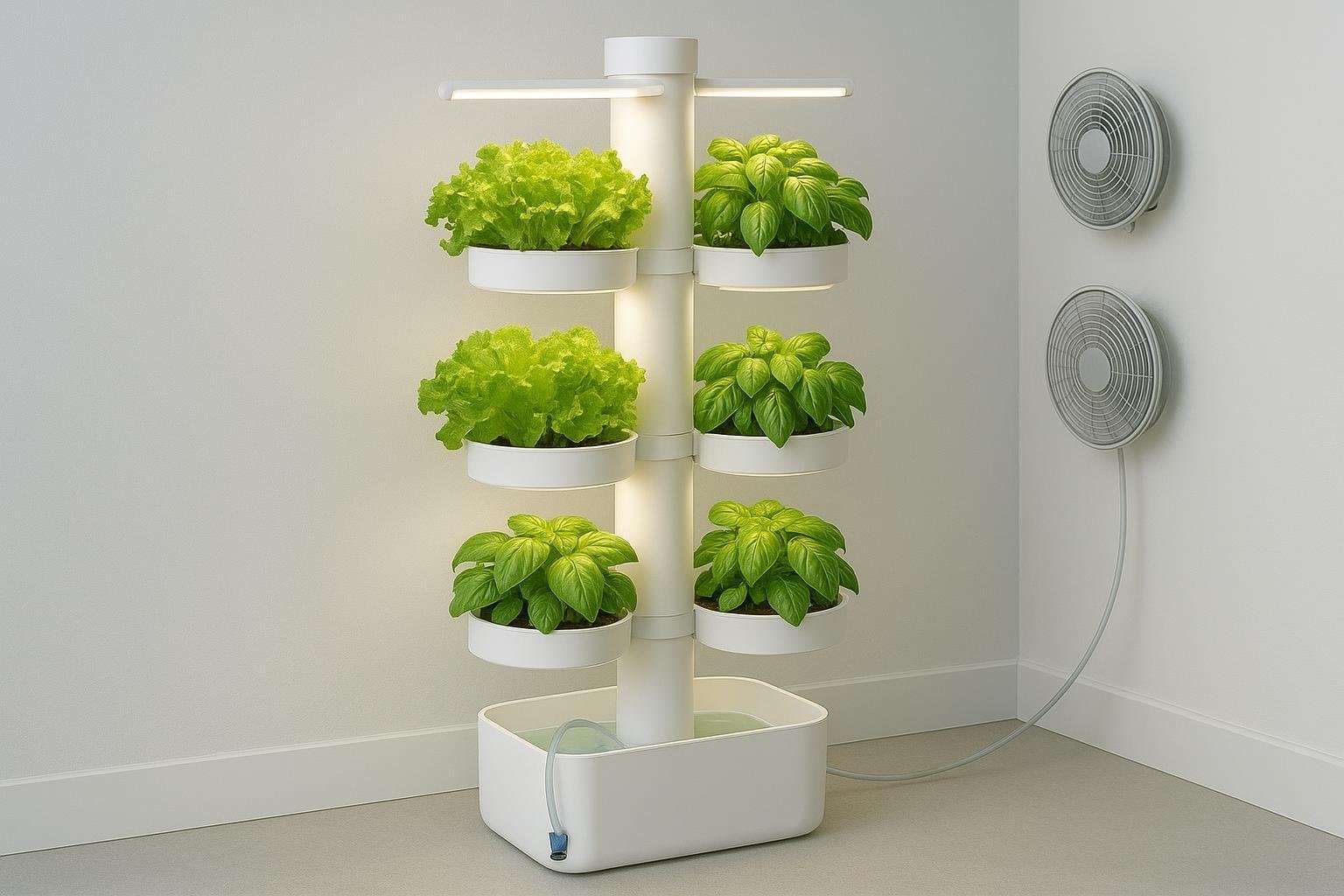 In terms of commercial production efficiency and crop performance, aeroponics data is remarkable. Data released by AeroFarms, a leading aeroponics company, shows that its aeroponic system can achieve up to 30 leafy vegetable harvest cycles per year, with an annual yield per unit area 390 times that of traditional farmland, while improving fertilizer use efficiency by 95%. Crop quality is also significantly improved; for example, the vitamin B content of some lettuce varieties has been tested to be increased by more than 50%. From an investment model perspective, although the initial equipment cost of an aeroponic system may be 15% to 25% higher than that of a conventional hydroponic system, its extremely low water costs, faster growth cycle (averaging 30% to 50% shorter), and zero pesticide use due to a 90% reduction in pest and disease risks significantly lower the marginal cost of long-term operation, compressing the investment payback period to 4 to 6 years.
Of course, building an efficient air garden also faces specific technical challenges and precision requirements. System stability is crucial; if the atomizing pump fails, crop roots may begin to dry out within 30 minutes to 1 hour. Therefore, redundant backup systems and real-time monitoring sensors (monitoring humidity, temperature, EC value, and pH value with an accuracy error of less than ±2%) are essential. The tolerance for fluctuations in nutrient solution concentration (EC value typically maintained between 1.2 and 2.0 mS/cm) and pH value (precisely controlled within the range of 5.5 to 6.5) is extremely low. Currently, this technology is most widely used in the seedling stage of high-value leafy vegetables, herbaceous plants, and some solanaceous crops. However, its energy economy still needs further optimization in supporting the large-scale production of staple crops such as wheat and corn. Nevertheless, with advancements in closed-loop automated control and renewable energy integration solutions, aeroponics is gradually moving from high-tech laboratories and commercial farms to homes and communities, becoming one of the most futuristic solutions for urban agriculture.
In terms of commercial production efficiency and crop performance, aeroponics data is remarkable. Data released by AeroFarms, a leading aeroponics company, shows that its aeroponic system can achieve up to 30 leafy vegetable harvest cycles per year, with an annual yield per unit area 390 times that of traditional farmland, while improving fertilizer use efficiency by 95%. Crop quality is also significantly improved; for example, the vitamin B content of some lettuce varieties has been tested to be increased by more than 50%. From an investment model perspective, although the initial equipment cost of an aeroponic system may be 15% to 25% higher than that of a conventional hydroponic system, its extremely low water costs, faster growth cycle (averaging 30% to 50% shorter), and zero pesticide use due to a 90% reduction in pest and disease risks significantly lower the marginal cost of long-term operation, compressing the investment payback period to 4 to 6 years.
Of course, building an efficient air garden also faces specific technical challenges and precision requirements. System stability is crucial; if the atomizing pump fails, crop roots may begin to dry out within 30 minutes to 1 hour. Therefore, redundant backup systems and real-time monitoring sensors (monitoring humidity, temperature, EC value, and pH value with an accuracy error of less than ±2%) are essential. The tolerance for fluctuations in nutrient solution concentration (EC value typically maintained between 1.2 and 2.0 mS/cm) and pH value (precisely controlled within the range of 5.5 to 6.5) is extremely low. Currently, this technology is most widely used in the seedling stage of high-value leafy vegetables, herbaceous plants, and some solanaceous crops. However, its energy economy still needs further optimization in supporting the large-scale production of staple crops such as wheat and corn. Nevertheless, with advancements in closed-loop automated control and renewable energy integration solutions, aeroponics is gradually moving from high-tech laboratories and commercial farms to homes and communities, becoming one of the most futuristic solutions for urban agriculture.
In terms of commercial production efficiency and crop performance, aeroponics data is remarkable. Data released by AeroFarms, a leading aeroponics company, shows that its aeroponic system can achieve up to 30 leafy vegetable harvest cycles per year, with an annual yield per unit area 390 times that of traditional farmland, while improving fertilizer use efficiency by 95%. Crop quality is also significantly improved; for example, the vitamin B content of some lettuce varieties has been tested to be increased by more than 50%. From an investment model perspective, although the initial equipment cost of an aeroponic system may be 15% to 25% higher than that of a conventional hydroponic system, its extremely low water costs, faster growth cycle (averaging 30% to 50% shorter), and zero pesticide use due to a 90% reduction in pest and disease risks significantly lower the marginal cost of long-term operation, compressing the investment payback period to 4 to 6 years.
Of course, building an efficient air garden also faces specific technical challenges and precision requirements. System stability is crucial; if the atomizing pump fails, crop roots may begin to dry out within 30 minutes to 1 hour. Therefore, redundant backup systems and real-time monitoring sensors (monitoring humidity, temperature, EC value, and pH value with an accuracy error of less than ±2%) are essential. The tolerance for fluctuations in nutrient solution concentration (EC value typically maintained between 1.2 and 2.0 mS/cm) and pH value (precisely controlled within the range of 5.5 to 6.5) is extremely low. Currently, this technology is most widely used in the seedling stage of high-value leafy vegetables, herbaceous plants, and some solanaceous crops. However, its energy economy still needs further optimization in supporting the large-scale production of staple crops such as wheat and corn. Nevertheless, with advancements in closed-loop automated control and renewable energy integration solutions, aeroponics is gradually moving from high-tech laboratories and commercial farms to homes and communities, becoming one of the most futuristic solutions for urban agriculture.
New business · By introduction
If this essay stung, the Autopsy will hurt more.
90 minutes. One of the four founding partners. A blunt second opinion on the brand strategy you're about to ship — and the one you should be shipping instead.
Book Your Autopsy or read the brief first →