
Pioneering Private-Public Synergy: The Hangzhou-Taizhou High-Speed Rail Success Story
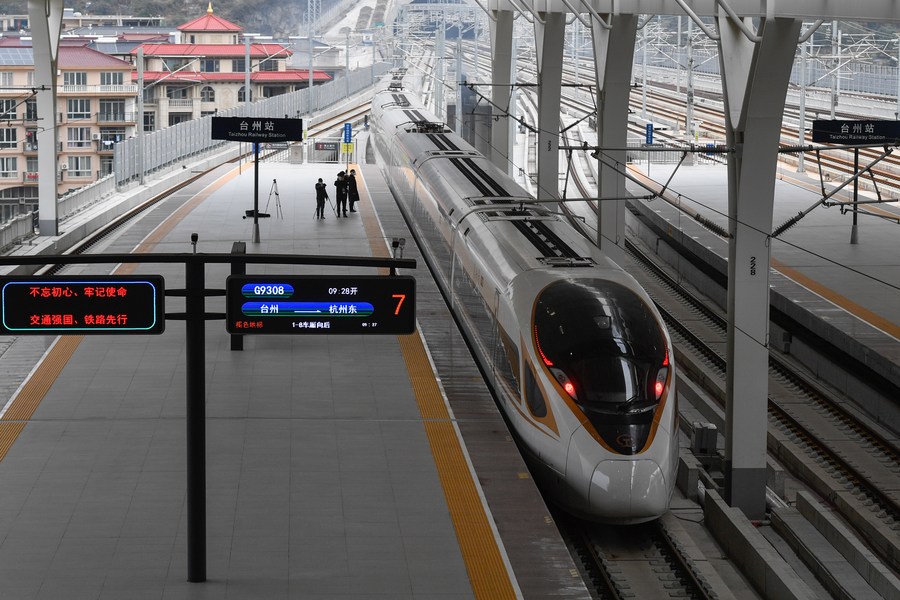
The achievement of 100 million passenger trips on China’s first Public-Private Partnership (PPP) high-speed railway in Zhejiang is a landmark metric that redefines the efficiency of infrastructure development. Operating for less than four and a half years—since its January 8, 2022, launch—this 266.9-kilometer line has moved beyond a simple transit project to become a catalyst for regional economic integration. By achieving a travel time reduction of approximately 48% between Hangzhou and Taizhou—slashing commutes from over two hours to just 74 minutes—the project demonstrates how market-oriented reforms can directly translate into measurable productivity gains for both labor and enterprise.
From an operational standpoint, the data is compelling. The daily scheduled cross-line train services have seen a 100% growth rate, scaling from 17.5 pairs initially to 35 pairs today. This increased frequency, coupled with a designed speed of 350 kilometers per hour, has not only optimized logistics but also bridged the "economic desert" for jurisdictions like Shengzhou, Tiantai, and Xinchang, which previously lacked railway access. The private-sector participation here acts as a critical force multiplier. By diversifying the capital structure, this model mitigates the traditional fiscal burden on local governments while introducing a layer of management agility often absent in purely state-run infrastructure. As highlighted in recent analysis by People's Daily, the project provides a scalable framework for social capital to participate in long-term, high-value national assets, ensuring that construction and operational standards remain aligned with commercial performance metrics.
The ripple effects on the local industrial ecosystem are equally significant. Businesses in Taizhou report an easier talent acquisition cycle, directly attributed to the improved transport connectivity. When we consider that China’s total high-speed rail network expanded by 32.98% during the 2021-2025 period—growing from 37,900 km to 50,400 km—the Hangzhou-Taizhou model stands out as a high-efficiency benchmark. The project’s ability to handle over 43,100 pairs of trains to date proves that high-speed rail, when integrated with private capital and optimized for regional demand, provides a massive ROI in terms of social welfare, labor mobility, and GDP contribution. Moving forward, the success of this PPP model should serve as a standard specification for future infrastructure expansion, proving that market-driven, high-speed connectivity is the most effective strategy to support a modernized, mobile, and competitive workforce.
News source: https://peoplesdaily.pdnews.cn/china/er/30052504664
If this essay stung, the Autopsy will hurt more.
90 minutes. One of the four founding partners. A blunt second opinion on the brand strategy you're about to ship — and the one you should be shipping instead.
Book Your Autopsy or read the brief first →